Thursday, March 14, 2013

Employment soars in February, Unemployment steady at 5.4%

Holy wow. No one saw this coming.

The Labour force figures released to day by the ABS, showed that employment grew in February by a whopping 0.6% in seasonally adjusted terms.

Now I know 0.6% doesn’t sound like much, but  to put it in some context, as stats wunderkind,Shane Wright, from the West Australian, noted soon after they were released, it was the biggest increase in employment in the month of January February since 1995. (He must have a seriously good spread sheet system going!)

There have been only 13 months this century where employment growth has been over 0.5%. That’s 13 out of 157 months. So let’s say this is a pretty good result. Here’s what it looks like over the past 5 years:

image

And if 5 years isn’t enough context for you, here’s the past 10 years:

image

Yep – it’s the second best month of employment growth in the past decade. Not too shabby.

I guess Glenn Stevens was on to something when he said before the economics committee last month, “Overall, there is a good deal of interest rate stimulus in the pipeline.”

There is a bit of debate about whether or not this figure is “real” given the ABS has revised its sample, and certainly the big surge is a bit more than you would have expected, so I say, look, let’s calm down. This is just an estimate, and will likely be revised next month, so it might fall below 0.6%, but I think you’d have to be the worst possible grouch to be thinking these figures are bad.

OK, to the unemployment rate. So we had a massive boost in employment, but the unemployment rate has… stayed flat.

It sits at 5.4% in both seasonally adjusted and trend terms.

image

The close up of the 12 month figures is interesting. Is the “flatness” a plateau or the top of a summit?

image

So why did the unemployment rate remain steady? Because of the increase in participation. Is this a cruel joke on Wayne Swan, that he can get a big boost in employment but no joy in the actual unemployment figure? No. The reason participation increased is because employment increased. People were coming back to the workforce. Were the situation such that employment wasn’t increasing, it’s likely participation wouldn’t have either.

The participation rate increased 0.3 percentage points from 65.0% to 65.3%. In trend terms it remained steady:

image

What this figure does however suggest is that the calculation of the ABS – both in terms of numbers employed and those in the labour force – has caused this jump.  Again, this doesn’t mean the unemployment rate is false, but that perhaps the employment growth and the participation rate increase are a bit overstated. Next month might see things in a more sober light.

Now last months figures were revised as well, and whereas last month there was the estimation that the trend growth in hours worked had fallen, now we see a much different picture – an increase of .13% in February (and in seasonally adjusted terms a 0.7% increase in hours worked!)

image

The growth in hours is modest historically… and well that’s about all you can say about it. I’d like to get more excited, but I’ll go with suggesting this month that the trend really is your friend. 

The good thing about the figures as well is that both full-time and part-time employment increased. Here though, we see the seasonally adjusted figures a bit more calm than the overall numbers, and the trend rate still showing negative monthly growth – a good calming statistic for those thinking boom time is here again.

image

As a  result we see the unemployment rate of those looking for full-time work stabilizing with the overall rate, and both are down from the peak they were at 6 months ago:

image

The good news as well is that the employment growth has occurred for both men and women, but the growth in male employment does seem to have faltered a touch (but that’s really suggesting a bit more of the data than it is saying – it is pretty steady):

image

And we also see the unemployment rate stay steady for both

image

The number jump around again with the employment to population ratio – which remains flat at 61.6% in trend terms, but went up 0.3 percentage points in seasonally adjusted terms. Again, all good, but I’m sticking with the trend this month:

image

Now to the states, and here’s where we really see some weird things.

I‘m not a big fan of state seasonally adjusted numbers, because you see really bizarre things like the numbers we have for Tasmania:

image

The trend figures se Tasmania going from best to worst, and conversely, instead of QLD being the only state to decline , it becomes the biggest growing state!

image

So I’m calling a time out and saying, things look too weird for me. So let’s look at the annual figures to take a chill pill, and get some figures that make sense:

image

And now to the impact of each state on the national unemployment rate:

Queensland has improved from being far and away the worst state, to now tying with Victoria.

image

So in terms of drag on the unemployment rate, QLD and Victoria are both costing the nation about 0.1 percentage points on the national

image

So to recap. Big employment growth number in seasonally adjusted terms, but I think it’s safer to focus on the trend numbers, and also on the unemployment rate. Sure we had a big boost in employment, but the unemployment rate has remained steady, and I think that reflects how the economy is going quite accurately.

Wednesday, March 13, 2013

Drum Piece: Recessions ain’t all that technical

My Drum piece today got a bit econ nerdy and talked about whether or not Victoria is in a recession on the basis of 2 consecutive quarter (or perhaps even 3) of negative growth of State Final Demand.

My points is that you can’t say it, but neither should we discount SFD as some sort of meaningless stat. When SFD starts going down, it’s a good time to start peeking around a bit and seeing what else is going wrong in the economy.

As a bit of a pointer, take this look at SFD of the states over the past 5 years:

image

I think it gives a pretty good representation of the GFC and the recoveries in all states.

Or maybe I just get distracted by all the pretty colours.

In the first draft of my article I was going to do a bit of a step back and look at the big picture of the national accounts. There wasn’t room, and also it was a bit tacked on, narrative-wise, so here are the graphs The Drum readers missed out on:

First the a comparison of how GDP has grown over the past 5 year compared to other nations. With the fourth quarter data of 2012 the past 5 years’ worth now contains only periods of the ALP Govt (but yes I acknowledge there is a fair bit of carry over in at least the first 6 months)

image

It’s pretty impressive, and amazingly shattering to anyone from the UK or Japan. Imagine living in an economy which is smaller than it was 5 years ago. And that’s in total. Forget about per capita.

Now let us compare that with how we went in the 5 years prior to Q1 2008:

image

Sure we’re leading but look us compared to everyone else. In 2003-2008 our growth was only 19% better than that achieved by the 2nd best country (UK). I. comparison, from 2008-2012, our growth was 115% better than the second best.

We have not only kept growing faster than these other countries, in the past 5 years we have increased our lead.

But I know what you’re thinking – the GFC is old news, how about since then? Well the ravages of the GFC began to ease in the second half of 2009. At that point even the UK and USA stopped having negative quarters of growth. So how have we gone in comparison to those countries during the “recovery” stage?

Well as the table below shows, the GFC pretty much stopped “directly” in the 2nd quarter of 2009.

  Q1-2008 Q2-2008 Q3-2008 Q4-2008 Q1-2009 Q2-2009 Q3-2009
Australia   0.3 0.7 -0.7 0.9 0.0 0.7
Canada   0.5 0.7 -1.1 -2.2 -0.9 0.4
Germany   -0.4 -0.4 -2.0 -4.1 0.2 0.8
Japan   -1.2 -1.1 -3.2 -4.0 1.7 0.0
United Kingdom   -0.9 -1.8 -2.1 -1.5 -0.2 0.4
United States   0.3 -0.9 -2.3 -1.3 -0.1 0.4
OECD - Total   -0.1 -0.7 -2.2 -2.3 0.2 0.6

After that the run of periods of negative growth stopped (for a while). So let;s see how each of those countries has done since Q3 2009:

image

What do you know, we’re still leading. Yes everyone is growing better than they are when you don’t include the GFC, but that really highlights just how vital it is to avoid the depths of the recessions. Growth coming out of them well be pretty similar for all – we’re not miles ahead of Canada for eg, but you can’t look at the past 5 years and pretend the GFC was just some blip that had no impact.

But I know what you’re thinking – sure anything looks good if you spread it over a few years, but what have you done for me lately?

Well here’s how all of those countries did in 2012:

image

Any way you slice it, our economy is not just outperforming the big economies of the west, it has been doing so for 5 years. You can thank China if you want, or the Government, or if you’re desperate you can say the past 5 years are all due to John Howard, but you cannot say we’re underperforming. Given how badly the USA and Japan have been (which together account for about 20% of our exports) it’s rather stunning how well we have done.

And for an added treat, just to make any Australians reading feel extra warm and fuzzy. Here’s the cumulative growth over the past 10 years:

image

Or to show just how stark the GFC was, here’s the graph in linear form showing the cumulative growth each year since 2003:

image

Someone was doing something right around 2008-09. But I guess we should bitch and moan about how the Govt blew the surplus…

Thursday, March 7, 2013

GDP–Australia’s economy grows by 3.1% in 2012, but looks to be slowing

I was going to do this last night, but I was side-tracked doing some other work, and also by the laughs going on down in Victoria.

So here is yesterday’s post today:

***

And so today the December 2012 National Accounts came out showing a nice (and reasonably in line with expectations) result of real GDP annual growth of 3.1% in seasonally adjusted terms. It came off the back of growth in the December quarter of 0.6%.

In trend terms the December quarter growth was 0.6%, but the annual figure was a touch lower than the seasonally adjusted figure, coming in at 2.9%

It’s always worth remembering that the figures are statistical measures, subject to confidence levels and adjustments as are all other such economic data.

If we look at how growth figures have been revised over the past few quarter we see a bit of variation:

  March 2012 Figures June 2012 Figures September 2012 Figures December 2012 Figures
Growth: Sept 2011

.97%

1.13%

1.18%

1.18%

Growth: Dec 2011

.62%

.50%

.70%

.59%

Growth: Mar 2012

1.30%

1.38%

1.30%

1.22%

Growth: June 2012

.64%

.58%

.65%

Growth: Sept 2012

.47%

.65%

Back when the March 2012 figures were released showing 1.3% growth in that quarter, there was a fair bit of scepticism.  It was subsequently revised up to 1.38% in the June 2012 figures, then back to 1.3% in the September 2012 figures, and in the latest figures it is at 1.22%. Similarly the June 2012 quarter figures has been revised up then down.

This month there has been a pretty sizeable revision of the September 2012 figure – from 0.47% to 0.65%. However this hasn’t changed the year of year growth estimation of the September 2012 data because as we can see today the December 2012 and March 2012 figures were both revised down.

So in the September 2012 data annual growth was going at 3.1%, and the most recent figures still have the September 2011 to September 2012 growth at 3.1%.

So it’s probably not too sensible to to get too caught up in revisions of any one particular quarter, but if you want to argue the economy was doing better than people thought in the September quarter of last year, today’s figures give you cause to at least begin arguing that.

Anyhoo let’s look at some graphs.

First the quarterly growth:

As you can see 4 of the past 5 quarters have had growth below the 10 year average.

image

Not surprisingly this has meant that annual growth is now only just above the 10 year average. It’s still doing well – 3.1% is nothing to sneeze at – but the trend estimate really highlights the sense that the economy slowed down in the second half of last year. Also once the March 2012 quarter is left out of the annual growth figures (ie in the next lot of figures) then it’s likely we’ll see a drop. 

image

To keep around 3% annual growth the March 2013 figures will need to see growth of around 1.1%. I can’t see that happening – not unless the GDP deflator really goes down.

Which brings us to the next point  that while this is okish news, it’s not as good as it normally would be for the Treasurer and his desires for growth to lead to increased tax revenue.

Once again we had a situation where nominal GDP growth (ie growth in current dollars) was below real GDP growth (growth in volume terms – ie accounting for inflation).  Once again the GDP deflator was in the negative – the first time going back to 1959 (and I’d bet, well before that) that there have been 3 consecutive quarters of negative annual growth in the GDP deflator:

image

So forget inflation, in GDP terms were in deflation territory – and in a way that we have never encountered before (at least outside of the Great Depression). To get a grasp of how different things are now to what was occurring during the mining boom of the early-mid 2000s, compare the real GDP annual growth with the nominal growth:

image

As shown earlier, we are currently pretty much on the 10 year average of real GDP growth, but the 10 year average of nominal GDP growth is 6.7%, whereas at the moment we are bumping along at 2%.

Just imagine how fatter Wayne Swan’s tax revenue would be if he had 6.7% nominal GDP growth? He could lay in a hammock and watch the surplus come in. Alas the hammock days of being a treasurer are over for now.

He can’t even look to great joy from export prices, because the terms of trade fell again. Down 2.7% to 88.8:

image

It still looks nice and high compared to the late 1990s, but a close up of the past 5 years shows a fairly different picture:

image

Not really booming is it?

Now to everyone’s favourite measure – productivity.

It grew in the December quarter by 0.5% in trend terms and 0.7% in seasonally adjusted, making it 8 consecutive quarters of trend productivity growth, which is the first time that’s happened for 10 years.

image

In annual terms we’re at a healthy 3.5% seasonally adjusted and 2.9% in trend.

image

Next quarter will likely see drop in the seasonally adjusted annual growth because the March 2012 saw 1.9% growth in that quarter, so unless the next quarter matches that (unlikely) it will drop a bit, but it will remain positive.

We have also had now 4 consecutive quarters of productivity growth above the Dec 1997-Dec2007 average.  Surely cause for a bit of cheer. (Though I’m not sure why I’m telling you this because no doubt it was front page of The Oz and AFR)

On labour costs, “Real unit (non-farm) labour costs” did rise again in the seasonally adjusted measure, but it declined in trend terms.

There is always a bit of hoo-hah about labour costs rising – as though they can always keep falling forever. But as I’ve noted before, the GFC caused labour costs to dive, and the recent rises are now pretty much in line with the trend of where cost were expected to be given the trend of the 5 years prior to the GFC hitting:

image

When it comes to the RBA worrying about labour costs rising, it looks at the nominal rate, and here we see nominal growth is actually below real growth – because of the GDP deflator being negative.

So are we going to see the RBA complain about rising labour costs leading to inflation? Not any time soon. With annual nominal unit labour costs growing at 0.6%, the whole “wages breakout” myth takes another big hit. In fact critics of the Fair Work Act are now at the point where they pretty much have to abandon macroeconomic data and focus on either industry specific (which too be honest hasn’t helped them much) or the dodgy “anecdotes”. Given that has been their main source of “data” it at least won’t mean they have to change much of their research.

image

In the breakdown of where the money is going, the compensation to employees of total factor income rose slightly, meaning we have well and truly put the GFC hit to employees behind us, and the share is now back at long term (well at least past 20 year) levels:

image

The share going to private corporations profits has thus declined again and is now showing a fairly big turnaround to a 40 year trend:

image

OK now to the states. There’s been a fair bit of palaver about Victoria now being in “recession” because it has shown 2 consecutive quarters of negative growth in State Final Demand:

image

Now firstly (and as has been stated a little bit on Twitter by a few econ types), State Final Demand is not equal to Gross State Product. For example a lot of what Western Australia is “demanding” might actually be coming from Victoria. In such a circumstance it wouldn’t show up in Victoria’s SFD, but in WA’s even though it was being produced in Victoria.

Secondly we shouldn't give too much of a crap about whether or not a state or a nation is in technical recession because measures like 2 consecutive quarters of negative GDP growth are just a bullshit arbitrary designations of no real worth that no one really cares about if they want to be taken seriously outside of a talk-back radio show.

You want to know if you’re in a recession? How about looking at employment growth – that’s as good an indicator as GDP growth for the health of an economy.

But be that as it may. Clearly Victoria’s economy is not healthy; neither is South Australia's, and well Tasmania…  .

Quarterly SFD is also in my opinion a bit jumpy so I prefer looking at annual growth:

image

Again, Victoria not doing well. Recession? I’ll leave that up to those needing to sell newspapers.

Similarly Queensland is not coping with life as good as one might hope – and that is a bit more significant because you would expect its industries to be demanding production from other places. That it is not analogous to Gross State Product doesn’t mean it is not a good indicator of economic health. Just look at QLD’s annual SFD growth back to 1985 and you get a pretty good picture of when the state was doing well, and when it was not:

image

All in all the National Accounts tell us what we all knew – the economy is grew at trend through 2012, but 2012-13 looks to be slowing, but not in any horrific sense, – probably around 2.4%-2.6%.

Below trend but now worse than that, but certainly no better. Inflation next to nothing, and the budget certainly not going to be in surplus (not that there’s anything wrong with that). 

Sunday, February 24, 2013

The Oscars 2012 – My picks and tips

This year’s Oscars have one advantage for cinema goers over pervious years. Whereas in the past to view all nominated films required a pretty long list of films, this year, in the feature film categories (excluding the animated and foreign films) only 24 different films have received nominations. By comparison, last year there were the 32 different films, in 2010, 31 and in 2009 32 films again. So at the very least this year the invite list for the awards ceremony will be shorter than in the past.

OK Let’s get to it.

Best Motion Picture of the Year

Nominees:

Amour (2012)
Argo (2012)
Beasts of the Southern Wild (2012)
Django Unchained (2012)
Les Misérables (2012)
Life of Pi (2012)
Lincoln (2012)
Silver Linings Playbook (2012)
Zero Dark Thirty (2012)

I’ve covered this category fairly extensively already. Among the list are a number of eminently Oscar worthy and Oscar bait films. Lincoln, Argo, Zero Dark Thirty and Silver Linings Playbook look to be the choices. Les Mis was the early favourite, but faltered when the reviews didn’t match the early hype. Normally I’d think Lincoln is the lock, but it really hasn’t won anything in the run up to the awards. Argo getting the SAG Award for best performance by a cast and also winning the BAFTA for Best Pic suggests that it is the one to beat.

Tip to Win: Argo
My pick: Amour

Best Performance by an Actor in a Leading Role

Nominees:TheMaster2012Poster (1)

Bradley Cooper for Silver Linings Playbook (2012)
Daniel Day-Lewis for Lincoln (2012)
Hugh Jackman for Les Misérables (2012)
Joaquin Phoenix for The Master (2012)
Denzel Washington for Flight (2012/I)

There is no way Day-Lewis will not win this. Put your house on him to become the first actor to win three Best Actor Awards. His performance is as good as everyone hoped it would be when word broke that he had been cast. He will forever be the definitive Lincoln. It seems hard to fathom that early on there were some complaining about the accent he used. He takes the role and even though we know he isn’t Lincoln there does not come through any sense that acting is occurring. A worthy winner in any year.

Except this year.

Joaquim Phoenix’s acting in The Master is extraordinary. He plays a loathsome character who is someone many of us would have encountered – the type of guy who does things that at first are funny but he keeps going to the point of it becoming awkward and unnerving. There is a scene at the start of the film where a bunch of sailors have made a sand castle in the figure of a woman; Phoenix’s character comes along and begins to pretend to pleasure it. The others laugh but then Phoenix keeps going, and the others not only stop laughing but feel the need to look away.

His performance is daring and complex and constantly interesting. It’s also the kind of role I’d like to se Day-Lewis try. After beginning his career with interesting roles he now seems to have settled into the “big showy this will win me Best Actor roles”. I’m not sure once he got the voice of Lincoln whether he needed to do much more work. I can’t conceive however how hard it would have been to stay within the character that Phoenix has to play. A performance for the ages.

Tip to Win: Daniel Day-Lewis
My Pick: Joaquim Phoenix

Best Performance by an Actress in a Leading Role
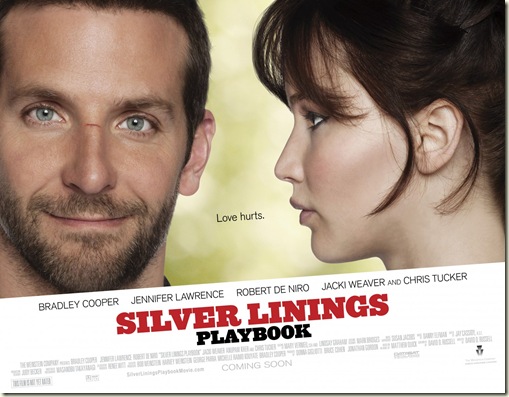
silver_linings_playbook_ver2_xlgNominees:

Jessica Chastain for Zero Dark Thirty (2012)
Jennifer Lawrence for Silver Linings Playbook (2012)
Emmanuelle Riva for Amour (2012)
Quvenzhané Wallis for Beasts of the Southern Wild (2012)
Naomi Watts for The Impossible (2012)

Firstly Wallis should be discounted. Child acting is pretty easy – moreover she has few lines to deliver and mostly just has to scream or pretend to be scared or confused. The only child acting performance I have felt deserved to be considered alongside adults was Anna Paquin in The Piano. For the rest, let them grow up and show us if they can act in a role that requires a bit more than just to be a child.

I would love Naomi Watts to win this. I think she is among the top women actors going round. Always interesting, often brave in her choices. I can’t wait to see what she does playing Diana Princess of Wales in Diana coming out this year – given the role, if she’s any good and the film is half decent, she’ll be a strong favourite this time next year. Her role in The Impossible sees her displaying all her skill. Unfortunately for most of the last half of the film she is unsighted. Were it a Best Actress per minute award I’d give it to her.

Jennifer Lawrence is the favourite, but I can’t give it to her. The role is easy – she gets to play the standard Oscar role friendly character who has emotional issues (heck even a mental illness). Yes she is wonderful in it (almost impossible not to fall in love with), but I think any actress would be because it’s a great chewy actory role.

Jessica Chastain is quickly becoming one of my favourite women actors. I’d like her to win this if only as a bit of a mini career award for her recent work in The Debt, The Help, The Tree of Life and Zero Dark Thirty. Perhaps the best thing about her acting here is she plays a character based on the same CIA agent as that played by Claire Danes in Homeland. Chastain however does it without having to resort to the Claire Danes Cry Face.

In any other year she would get the award were it my choice.

Except this year Emmanuelle Riva played Anne in Amour. A great role acted brilliantly. God she is good. Yes she has to act having a stroke, but it is not done in the “My Left Foot” style where the role is about overcoming physical limitations. At no stage does it seem she is showing off her acting – saying look at me I’m playing someone with a stroke!. She just is a human. Heartbreaking, and honest. Would be great to see her win, but I don’t think she will.

Tip to win: Jennifer Lawrence
My pick: Emmanuelle Riva

Best Performance by an Actor in a Supporting Role

Nominees:

Alan Arkin for Argo (2012)
Robert De Niro for Silver Linings Playbook (2012)tommy-lee-jones
Philip Seymour Hoffman for The Master (2012)
Tommy Lee Jones for Lincoln (2012)
Christoph Waltz for Django Unchained (2012)

Waltz is the best thing in Django Unchained, and I’d be happy for him to win it, but as it comes so close to his award for Inglorious Basterds I doubt it’ll happen. Arkin has little to do except be the comic relief; he’s good but it’s hardly a stretch – and importantly his entire character is a fiction.

De Niro is getting praise, but mostly it is because he is again acting instead of performing self-parody. But how can you give De Niro an award for playing a guy with tics and a compulsion that has him saying lines over and over and then doing the same tic again. That’s so within De Niro’s standard shtick that it hardly counts as acting.

Which leaves Tommy Lee Jones and Philip Seymour Hoffman. I’d go for Hoffman over Jones though both are deserving. Hoffman’s is the bigger role, but he is a supporting actor nevertheless. The best thing I can say about Jones’s role is that I wish there had been more of it. And given he is such a sour puss I think the Academy will give it to him just to see if he can crack a smile.

Tip to Win: Tommy Lee Jones
My pick: Philip Seymour Hoffman

les_miserables_ver7_xlgBest Performance by an Actress in a Supporting Role

Nominees:

Amy Adams for The Master (2012)
Sally Field for Lincoln (2012)
Anne Hathaway for Les Misérables (2012)
Helen Hunt for The Sessions (2012)
Jacki Weaver for Silver Linings Playbook (2012)

This is down to Anne Hathaway or Sally Field. I think if Anne Hathaway loses she will need to display the greatest acting role of her life not to appear disappointed. She is the short priced favourite and has pretty much won everything. If Sally Field wins I think you can lock in Lincoln to win the big prize. But even though Les Mis hasn’t garnered the huge praise that was expected, Hathaway lived up to all the hype and probably went beyond it. The best thing you can say about her portrayal of Fantine is that it will affect those who play the role on stage. Do they now go for the standard big Broadway notes or do they reveal the emotional core and hurt of the song as did Hathaway? No other performance in Les Mis will have any impact on the stage versions, and that I think shows how good hers’ was.

Tip to win: Anne Hathaway
My pick: Anne Hathaway

Best Achievement in Directing

Nominees:

Michael Haneke for Amour (2012)
Ang Lee for Life of Pi (2012)
David O. Russell for Silver Linings Playbook (2012)
Steven Spielberg for Lincoln (2012)
Benh Zeitlin for Beasts of the Southern Wild (2012)

Much as I love Amour the directing is not the kind that wins awards. That neither Ben Affleck, Kathryn Bigelow or Paul Thomas Anderson are nominated is a disgrace.

I think Spielberg will win it in a replay of Saving Private Ryan where he gets this award but the film lose the Best Picture gong, but he doesn’t deserve it:

Tip to win: Steven Spielberg
My pick: Paul Thomas Anderson, Ben Affleck or Kathryn Bigelow

Best Writing, Screenplay Written Directly for the Screen

Nominees:

Amour (2012): Michael Haneke
Django Unchained (2012): Quentin Tarantino
Flight (2012/I): John Gatins
Moonrise Kingdom (2012): Wes Anderson, Roman Coppola
Zero Dark Thirty (2012): Mark Boal

I haven’t seen Moonrise Kingdom or Flight (am seeing Flight this week).  Django Unchained will probably win because the academy loves big dialogue. Amour is a great film. Someone had to write that from nothing. That person was Michael Haneke. He should get it (But where the hell is Paul Thomas Anderson?) 

Tip to win: Quentin Tarantino
My pick: Michael Haneke

Best Writing, Screenplay Based on Material Previously Produced or Published

Nominees:

Argo (2012): Chris Terrio
Beasts of the Southern Wild (2012): Lucy Alibar, Benh Zeitlin
Life of Pi (2012): David Magee
Lincoln (2012): Tony Kushner
Silver Linings Playbook (2012): David O. Russell

Life of Pi probably deserves to win by being the “unfilmable novel”. Lincoln was a bit rote for mine. Argo probably deserves the award for realising the reality was a bit dull and needed spicing up – and bugger the truth!  But no – Life of Pi gets it.

Tip to Win: Chris Terrio, Life of Pi
My pick: Chris Terrio, Life of Pi

Best Animated Feature Film of the Year

Nominees:

Brave (2012): Mark Andrews, Brenda Chapman
Frankenweenie (2012): Tim Burton
ParaNorman (2012): Sam Fell, Chris Butler
The Pirates! Band of Misfits (2012): Peter Lord
Wreck-It Ralph (2012): Rich Moore

Unusually (given I have two young daughters) this year I haven’t seen any of these films, and usually you’d lock in the Pixar film. But Brave didn’t get rapturous reviews.

Tip to Win: Wreck-it-Ralph

Best Foreign Language Film of the Year

Nominees:

Amour (2012)(Austria)
War Witch (2012)(Canada)
No (2012/I)(Chile)
A Royal Affair (2012)(Denmark)
Kon-Tiki (2012)(Norway)

Look I haven’t seen any oft these except Amour, but if you think a film that is also nominated for Best Picture is going to lose this category you’d be quite mistaken.

Tip to win: Amour.

Best Achievement in Cinematography

Nominees:

Anna Karenina (2012/I): Seamus McGarvey
Django Unchained (2012): Robert Richardson
Life of Pi (2012): Claudio Miranda
Lincoln (2012): Janusz Kaminski
Skyfall (2012): Roger Deakins

The standard pick would be Life of Pi – but how much of the amazing visuals is cinematography and how much is special effects? I;m quite surprised Zero Dark Thirty didn’t get a nod, nor Argo, which contained some excellent footage that perfectly gave the impression of old TV footage. That this category is nominated by cinematographers and that they picked Skyfall – and Bond films aren’t normal Oscar fare – I have to think they saw something extra there. And thinking back it was pretty impressive – the scene in the house at the end are really well shot, not to mention the opening bit on the train. Also this is Roger Deakin 9th nomination and he is yet to win. Nine! That’s more nominations than Peter O’Toole has without a win. Give him the damn award!

Tip to win: Claudio Miranda, Life of Pi
My pick: Roger Deakins, Skyfall


Best Achievement in Editing

Nominees:

Argo (2012): William Goldenberg
Life of Pi (2012): Tim Squyres
Lincoln (2012): Michael Kahn
Silver Linings Playbook (2012): Jay Cassidy, Crispin Struthers
Zero Dark Thirty (2012): William Goldenberg, Dylan Tichenor

Take your pick between Argo and Zero Dark Thirty. I think ZD30 gets it – lots of back and forth, lots of narrative to keep under control, and it certainly does that.

Tip to Win: Zero Dark Thirty
My pick: Zero Dark Thirty

Best Achievement in Production Design
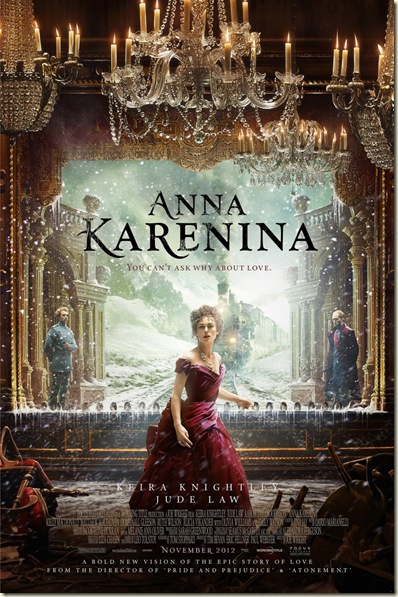
anna_karenina_ver3_xlg

Nominees:

Anna Karenina (2012/I): Sarah Greenwood, Katie Spencer
The Hobbit: An Unexpected Journey (2012): Dan Hennah, Ra Vincent, Simon Bright
Les Misérables (2012): Eve Stewart, Anna Lynch-Robinson
Life of Pi (2012): David Gropman, Anna Pinnock
Lincoln (2012): Rick Carter, Jim Erickson

Rule out Life of Pi and The Hobbit due to CGI laden design. Lincoln? Yeah I guess it was all good, but nothing stunning.  Les Miserables was good, but the way Hooper shot it in such close up the design was never realyl given much of a show. For mine, Anna Karenina was brilliantly staged. I think it’ll win as well.

Tip to win: Anna Karenina
My pick: Anna Karenina

Best Achievement in Costume Design

Nominees:

Anna Karenina (2012/I): Jacqueline Durran
Les Misérables (2012): Paco Delgado
Lincoln (2012): Joanna Johnston
Mirror Mirror (2012/I): Eiko Ishioka
Snow White and the Huntsman (2012): Colleen Atwood

I think Snow White wins this for no reason other than I think it has a big wow factor that’ll get it some votes

Tip to Win: Snow White and the Huntsman
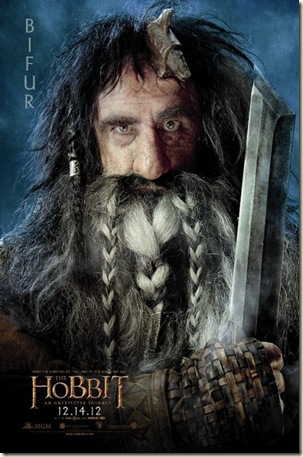
 

hobbit_an_unexpected_journey_ver20Best Achievement in Makeup and Hairstyling

Nominees:

Hitchcock (2012): Howard Berger, Peter Montagna, Martin Samuel
The Hobbit: An Unexpected Journey (2012): Peter King, Rick Findlater, Tami Lane
Les Misérables (2012): Lisa Westcott, Julie Dartnell

Well The Hobbit I guess. Do you really think I watch films and think about the hairstyles?

Tip to Win: The Hobbit


Best Achievement in Music Written for Motion Pictures, Original Score

Nominees:

Anna Karenina (2012/I): Dario Marianelli
Argo (2012): Alexandre Desplat
Life of Pi (2012): Mychael Danna
Lincoln (2012): John Williams
Skyfall (2012): Thomas Newman

None of the scores really grabbed me this year – not like say Trent Reznor’s Hand Covers Bruise from The Social Network did a couple years ago. And there was no jaw dropper/ instantaneously part of culture score like Gustavo Santaolalla’s score for Brokeback Mountain. Skyfall? Meh the work was in the opening song, thereafter nothing really stood out for me. Lincoln? John Williams’ score was nothing special. Argo’s score mostly kept out of the way – it fitted with the film and did it’s job well – and perhaps that is the mark of a good score? The music in Anna Karenina by contrast was noticeable – but given the movie includes trips to the opera and many dances, that is no surprise. It gets my runners-up prize. The best one for me was Life of Pi, and I think it’ll win it as well. skyfall_xlg

Tip to Win: Mychael Danna, Life of Pi


Best Achievement in Music Written for Motion Pictures, Original Song

Nominees:

Chasing Ice (2012): J. Ralph("Before My Time")
Les Misérables (2012): Alain Boublil, Claude-Michel Schönberg, Herbert Kretzmer("Suddenly")
Life of Pi (2012): Mychael Danna, Bombay Jayshree("Pi's Lullaby")
Skyfall (2012): Adele, Paul Epworth("Skyfall")
Ted (2012): Walter Murphy, Seth MacFarlane("Everybody Needs a Best Friend")

If Adel doesn’t win this then you will know that someone time tomorrow the world has ended. And seriously, it deserves to win as well. Try and hum any of the rest (and surely the Thunder song from Ted must have been a chance??!)

Tip to win: Skyfall

Best Achievement in Sound Mixing

Nominees:

Argo (2012): John T. Reitz, Gregg Rudloff, José Antonio García
Les Misérables (2012): Andy Nelson, Mark Paterson, Simon Hayes
Life of Pi (2012): Ron Bartlett, Doug Hemphill, Drew Kunin
Lincoln (2012): Andy Nelson, Gary Rydstrom, Ron Judkins
Skyfall (2012): Scott Millan, Greg P. Russell, Stuart Wilson

Combining live singing and cannon fire? I think Les Mis gets this

Tip to Win: Les Miserables

Best Achievement in Sound Editing

Nominees:

Argo (2012): Erik Aadahl, Ethan Van der Ryn
Django Unchained (2012): Wylie Stateman
Life of Pi (2012): Eugene Gearty, Philip Stockton
Skyfall (2012): Per Hallberg, Karen M. Baker
Zero Dark Thirty (2012): Paul N.J. Ottosson

I liked the sound effects editing in the final part of Zero Dark Thirty mostly because the gunfire didn’t sound like movie gun fire. It was actually understated. So I’ll go with that.

Tip to win: Zero Dark Thirty

Best Achievement in Visual Effects

Nominees:

The Avengers (2012): Janek Sirrs, Jeff White, Guy Williams, Daniel Sudick
The Hobbit: An Unexpected Journey (2012): Joe Letteri, Eric Saindon, David Clayton, R. Christopher White
Life of Pi (2012): Bill Westenhofer, Guillaume Rocheron, Erik De Boer, Donald Elliott
Prometheus (2012/I): Richard Stammers, Trevor Wood, Charley Henley, Martin Hill
Snow White and the Huntsman (2012): Cedric Nicolas-Troyan, Phil Brennan, Neil Corbould, Michael Dawson

The tiger. Seriously. That’s all you need know.

Tip to Win: Life of Pi

The rest I must admit I haven’t seen so I won’t bother even guessing. Though I did see. The Simpsons: The Longest Daycare (2012), and I think that is the best thing The Simpsons have been involved with for about 15 years, so I’ll give it the win.

Anyhoo, enjoy the red carpet, enjoy the speeches (remember the caveat – those actors who first acted on stage always give the best speeches – which alas is why this year’s speeches will no doubt be dire)